





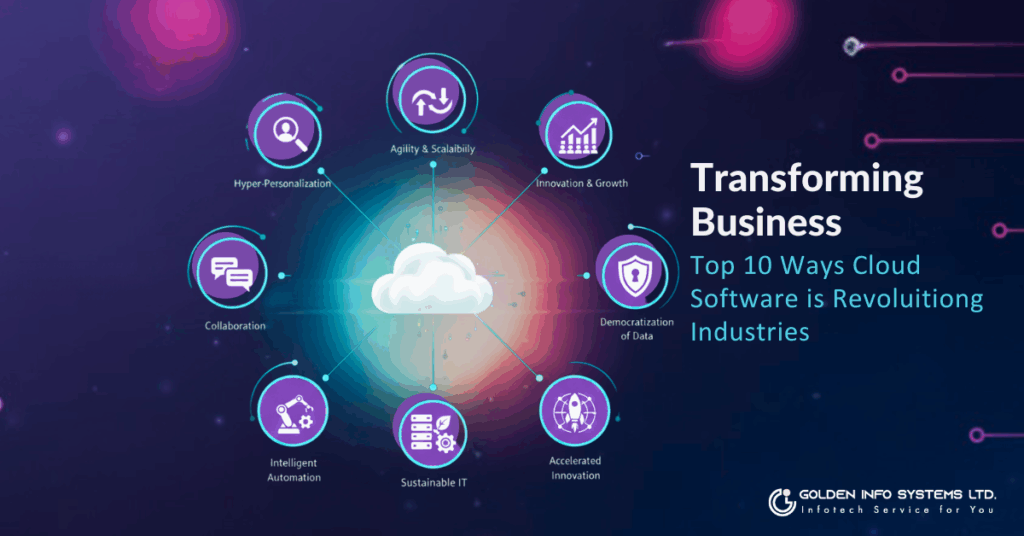
The digital landscape is in a constant state of flux, and for businesses to thrive, they must adapt and embrace the technological advancements that come their way. In 2025, cloud-based software has solidified its position not just as a tool, but as a fundamental catalyst for transformation across industries. From fledgling startups to multinational corporations, the cloud is reshaping operations, fostering innovation, and redefining what’s possible. This in-depth guide explores the top 10 ways cloud-based software is revolutionizing businesses in 2025, offering insights into how you can leverage these changes for sustainable growth and a competitive edge.
1. Hyper-Personalization at Scale: The AI-Powered Customer Experience
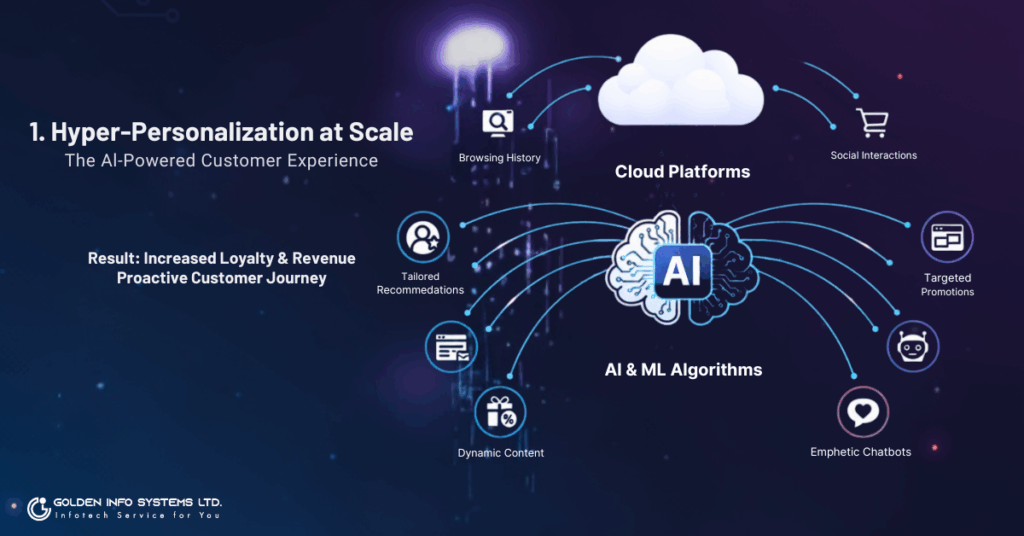
In today’s competitive market, a one-size-fits-all approach to customer engagement is a recipe for failure. Cloud-based software, supercharged with Artificial Intelligence (AI) and Machine Learning (ML), is enabling businesses to deliver hyper-personalized experiences at an unprecedented scale.
Cloud platforms can collect and analyze vast amounts of customer data in real-time – from browsing history and purchase patterns to social media interactions and customer service inquiries. AI algorithms then sift through this data to identify individual preferences, predict future needs, and tailor every touchpoint of the customer journey.
Imagine a retail website that dynamically rearranges its product display based on a visitor’s past purchases and browsing behavior. Or a streaming service that curates a unique content library for each user, complete with personalized recommendations and targeted promotions. This level of personalization, once the domain of tech giants, is now accessible to businesses of all sizes through cloud-based CRM, marketing automation, and e-commerce platforms.
In 2025, this trend is moving beyond simple recommendations. We’re seeing the rise of “empathetic AI,” where cloud-powered systems can analyze customer sentiment through text and even voice interactions to provide more nuanced and emotionally intelligent responses. This is transforming customer service, with AI-powered chatbots and virtual assistants capable of handling complex queries with a human-like touch, freeing up human agents to focus on more strategic tasks.
The result is a more engaging, relevant, and satisfying customer experience that fosters loyalty and drives revenue. By leveraging the power of AI in the cloud, businesses can move from a reactive to a proactive approach, anticipating customer needs before they even arise.
2. Unprecedented Agility and Scalability: The Elastic Infrastructure
The business world is more volatile than ever. Market demands can shift in an instant, and the ability to adapt quickly is paramount to survival. This is where the inherent agility and scalability of cloud-based software truly shine.
Traditionally, businesses had to invest in and maintain their own on-premise IT infrastructure. This meant purchasing expensive servers, storage, and networking equipment, and hiring a team of IT professionals to manage it all. This model was not only costly but also incredibly rigid. Scaling up to meet a sudden surge in demand, or scaling down during a lull, was a slow and cumbersome process.
Cloud computing flips this model on its head. With cloud-based software, businesses can access computing resources on a pay-as-you-go basis. Need more processing power for a major product launch? You can instantly provision additional resources from your cloud provider. Is business slowing down after the holiday season? You can scale back your resources and avoid paying for what you don’t use.
This “elastic” infrastructure allows businesses to be incredibly nimble and responsive to market changes. It eliminates the need for large upfront capital expenditures on hardware, making it easier for startups and small businesses to compete with larger, more established players.
In 2025, we’re seeing this trend evolve with the rise of serverless computing. With serverless, developers can build and run applications without having to worry about managing the underlying infrastructure at all. The cloud provider automatically provisions and scales the necessary resources, allowing developers to focus solely on writing code. This further accelerates the development lifecycle and enables businesses to bring new products and services to market faster than ever before.
3. The Democratization of Data: Actionable Insights for Everyone
Data is the new oil, but for it to be truly valuable, it needs to be accessible and understandable to everyone in the organization, not just a select few data scientists. Cloud-based business intelligence (BI) and analytics tools are democratizing data, empowering employees at all levels to make data-driven decisions.
Modern cloud-based analytics platforms offer intuitive, user-friendly interfaces with drag-and-drop functionality, making it easy for non-technical users to create their own reports and dashboards. These tools can connect to a wide range of data sources, from internal databases to external social media platforms, providing a holistic view of the business.
Consider a marketing manager who can now, with a few clicks, analyze the performance of a recent campaign across different channels, identify the most effective messaging, and optimize future campaigns for better results. Or a sales representative who can access real-time data on customer behavior and purchase history to tailor their sales pitch and close more deals.
In 2025, the focus is shifting from simply presenting data to providing actionable insights. AI and ML are being integrated into these platforms to automatically identify trends, anomalies, and opportunities that might otherwise go unnoticed. These systems can even provide prescriptive recommendations, suggesting the next best course of action based on the data.
This democratization of data is fostering a culture of data literacy and empowering employees to take ownership of their work and contribute to the overall success of the business.
4. Fostering a Culture of Collaboration: The Anywhere Workplace
The nature of work has fundamentally changed. Remote and hybrid work models are no longer the exception but the norm. Cloud-based collaboration tools have been the linchpin of this transformation, enabling teams to stay connected, productive, and engaged, regardless of their physical location.
Platforms like Microsoft 365 and Google Workspace have become indispensable, providing a suite of tools for real-time document editing, video conferencing, project management, and instant messaging. These cloud-based solutions ensure that everyone has access to the latest version of a document, eliminating the confusion and inefficiencies of email attachments.
In 2025, we are seeing the emergence of more immersive and integrated collaboration experiences. The metaverse, powered by the cloud, is beginning to offer virtual meeting spaces where employees can interact as avatars, fostering a greater sense of presence and connection than traditional video calls.
Furthermore, cloud-based project management and workflow automation tools are streamlining processes and breaking down silos between departments. By providing a centralized platform for tracking tasks, deadlines, and progress, these tools enhance transparency and accountability, ensuring that everyone is aligned and working towards the same goals.
This shift to a more collaborative and flexible work environment is not just about convenience; it’s about attracting and retaining top talent. In a competitive job market, offering the flexibility to work from anywhere is a significant advantage.
5. Fortified Security in a Threatening Landscape: The Cloud’s Protective Shield
In an increasingly digital world, cybersecurity is a top concern for every business. The consequences of a data breach can be devastating, both financially and reputationally. Cloud-based software, contrary to some early misconceptions, can actually provide a more secure environment than traditional on-premise solutions.
Leading cloud providers like Amazon Web Services (AWS), Microsoft Azure, and Google Cloud invest billions of dollars in their security infrastructure, employing teams of world-class security experts to protect their platforms from the latest threats. They offer a wide range of security features, including advanced firewalls, intrusion detection and prevention systems, and robust encryption for data both in transit and at rest.
In 2025, we are seeing the widespread adoption of a “zero-trust” security model in the cloud. This approach assumes that no user or device can be trusted by default, and requires strict verification for every access request. This helps to prevent unauthorized access to sensitive data, even if a user’s credentials are compromised.
Furthermore, cloud-based security solutions are leveraging AI and ML to proactively identify and respond to threats in real-time. These intelligent systems can analyze network traffic for suspicious patterns, detect malware and phishing attempts, and automatically isolate and neutralize threats before they can cause any damage.
For businesses, this means they can benefit from enterprise-grade security without having to make a massive investment in their own security infrastructure. This allows them to focus on their core business activities, with the peace of mind that their data is protected by the best in the business.
6. The Rise of Sustainable IT: A Greener Way to Compute
Environmental, Social, and Governance (ESG) considerations are becoming increasingly important for businesses. Consumers and investors alike are demanding that companies operate in a more sustainable and responsible manner. Cloud-based software can play a significant role in helping businesses reduce their carbon footprint and achieve their sustainability goals.
The massive data centers operated by major cloud providers are far more energy-efficient than the on-premise server rooms of individual businesses. These providers leverage economies of scale to invest in cutting-edge cooling technologies, energy-efficient hardware, and renewable energy sources.
By migrating their IT infrastructure to the cloud, businesses can significantly reduce their energy consumption and carbon emissions. According to some studies, moving to the cloud can be up to 80% more energy-efficient for small and medium-sized businesses.
In 2025, cloud providers are becoming even more transparent about their environmental impact. They are providing customers with tools to track the carbon footprint of their cloud usage and are offering “green” regions powered entirely by renewable energy. This allows businesses to make more informed decisions and choose the most sustainable cloud solutions for their needs.
The move to the cloud is not just a technological shift; it’s a step towards a more sustainable future for business and the planet.
7. Streamlining Operations with Intelligent Automation
Repetitive, manual tasks are a drain on employee productivity and morale. Cloud-based software is a powerful enabler of intelligent automation, allowing businesses to streamline their operations, reduce errors, and free up employees to focus on more strategic and creative work.
From automating invoice processing and data entry to managing customer support tickets and social media updates, the possibilities for automation in the cloud are vast. Cloud-based Robotic Process Automation (RPA) tools can be configured to mimic human actions and interact with various software applications, automating a wide range of business processes.
In 2025, we are seeing the integration of AI and ML into these automation platforms, leading to the rise of “hyperautomation.” This next wave of automation goes beyond simple task automation and can handle more complex, multi-step processes that require decision-making and problem-solving capabilities.
For example, an AI-powered automation platform could analyze incoming customer emails, understand the intent of the message, and automatically route it to the appropriate department or even generate a personalized response.
By embracing intelligent automation in the cloud, businesses can achieve significant gains in efficiency, accuracy, and productivity, ultimately leading to a more agile and competitive organization.
8. Accelerated Innovation and Faster Time-to-Market
In today’s fast-paced business environment, the ability to innovate and bring new products and services to market quickly is a key differentiator. Cloud-based software provides the tools and infrastructure that developers need to build, test, and deploy applications at an unprecedented speed.
Cloud platforms offer a wide range of pre-built services and APIs for everything from databases and storage to AI and machine learning. This allows developers to focus on building the unique features of their applications, rather than having to build everything from scratch.
The adoption of DevOps practices, which emphasize collaboration and communication between development and operations teams, is further accelerated by the cloud. Cloud-based tools for continuous integration and continuous delivery (CI/CD) automate the process of building, testing, and deploying code, enabling developers to release new features and updates to customers in a matter of hours or even minutes.
In 2025, the rise of low-code and no-code development platforms in the cloud is empowering “citizen developers” – employees with little to no coding experience – to build their own applications. This is further democratizing innovation and allowing businesses to respond even more quickly to changing customer needs.
By leveraging the power of the cloud, businesses can foster a culture of experimentation and innovation, allowing them to stay ahead of the curve and disrupt their industries.
9. Global Reach with Local Performance: A Worldwide Presence in Minutes
Expanding into new geographic markets has traditionally been a complex and expensive undertaking, requiring significant investment in local infrastructure and personnel. Cloud-based software has dramatically lowered the barrier to entry for global expansion.
Major cloud providers have a global network of data centers, allowing businesses to deploy their applications and services in close proximity to their customers, no matter where they are in the world. This reduces latency and ensures a fast and responsive user experience, which is crucial for customer satisfaction and retention.
With the cloud, a business can establish a worldwide presence in a matter of minutes, without having to set up a single physical server. This allows them to test new markets with minimal risk and scale their operations as their international customer base grows.
In 2025, we are seeing the rise of edge computing, a distributed computing paradigm that brings computation and data storage closer to the sources of data. This is particularly important for applications that require real-time data processing, such as the Internet of Things (IoT) and autonomous vehicles. By leveraging edge computing in the cloud, businesses can deliver even faster and more reliable services to their global customers.
10. Robust Disaster Recovery and Uninterrupted Business Continuity
Disruptions, whether from natural disasters, cyberattacks, or hardware failures, are an unfortunate reality of doing business. A prolonged period of downtime can result in significant financial losses and damage to a company’s reputation. Cloud-based software offers robust disaster recovery and business continuity solutions that can help businesses get back on their feet quickly after a disruption.
Cloud providers offer a range of backup and recovery services that allow businesses to regularly back up their data and applications to multiple geographic locations. In the event of a disaster, they can quickly failover to a secondary site and continue their operations with minimal downtime.
In 2025, these services are becoming even more sophisticated, with the ability to automate the entire disaster recovery process. This means that businesses can recover from a disruption with the push of a button, without any manual intervention.
By leveraging the cloud for disaster recovery, businesses can ensure that their critical systems and data are always available, no matter what happens. This provides them with the resilience and peace of mind they need to navigate an uncertain world.
The Future is in the Cloud
The transformative power of cloud-based software is undeniable. In 2025, it is no longer a question of if businesses should adopt the cloud, but how they can leverage its full potential to drive growth, innovation, and resilience.
From delivering hyper-personalized customer experiences and fostering a culture of collaboration to fortifying security and promoting sustainability, the cloud is reshaping every aspect of the modern business. By embracing these top 10 transformations, businesses can position themselves for success in the digital age and build a brighter, more prosperous future.
The journey to the cloud is not just a technological upgrade; it’s a strategic imperative. The businesses that embrace this transformation will be the ones that thrive in the years to come.
Frequently Asked Questions (FAQ) about Cloud-Based Software
1. Is cloud-based software really secure for my business data?
This is one of the most common and important questions. The short answer is yes, it is extremely secure. Reputable cloud providers like AWS, Google Cloud, and Microsoft Azure have multi-billion dollar security infrastructures that far exceed what most individual businesses could afford. They employ teams of top cybersecurity experts and use advanced measures like:
- End-to-end encryption: Your data is scrambled and unreadable both while it’s being transferred and while it’s stored.
- 24/7 monitoring: Automated systems and human experts constantly watch for suspicious activity.
- Redundancy: Your data is often copied and stored in multiple secure locations, so even if one data center has an issue, your information is safe.
- Compliance with international standards: They adhere to strict global security and privacy regulations.
For most businesses, moving to the cloud actually represents a significant security upgrade compared to managing servers on-premise.
2. Isn’t cloud software more expensive than buying a one-time license?
It might seem that way, but a subscription model is often more cost-effective in the long run. Consider the Total Cost of Ownership (TCO).
With traditional software, you have many hidden costs:
- The large, upfront cost of the software license.
- The cost of server hardware to run it.
- Salaries for IT staff to maintain and secure the servers.
- Electricity costs to power and cool the servers.
- Costs for upgrades and maintenance.
With cloud software, you have a predictable monthly or annual fee. This “Operating Expense” (OpEx) model includes security, maintenance, updates, and server management. You don’t have to worry about hardware failing or paying for upgrades. The pay-as-you-go model also means you only pay for what you use, making it incredibly efficient.
3. What happens if my internet connection goes down? Will I lose access to my work?
This is a valid concern, especially in regions where internet connectivity can be inconsistent. However, modern cloud software is designed with this in mind.
- Offline Functionality: Many cloud applications, like Google Docs or Microsoft 365, have robust offline modes. You can continue to work on your documents, and they will automatically sync with the cloud as soon as your connection is restored.
- Mobile Hotspots: In a brief outage, switching to a mobile data hotspot is a quick and easy backup to stay connected.
- Focus on Criticality: While a temporary outage might be an inconvenience for some tasks, critical business operations can often be managed via mobile apps until the primary connection is back online. As internet infrastructure continues to improve in Bangladesh, this concern is becoming less of an issue.
4. How difficult is it to migrate my existing business data to the cloud?
The migration process can range from simple to complex, depending on your current systems. However, you don’t have to do it alone. Most cloud software providers and their local partners offer dedicated migration support.
The process typically involves:
- Assessment: An expert will analyze your current data and systems.
- Planning: They create a detailed migration plan to minimize disruption.
- Execution: The data is carefully and securely transferred to the cloud.
- Validation: You confirm that all your data has been moved correctly and your teams are trained on the new system.
While it requires planning, a well-managed migration ensures a smooth transition with minimal downtime for your business.
5. With so many options, how do I choose the right cloud software for my business?
Choosing the right software is crucial. Here’s a simple framework to guide your decision:
- Identify Your Needs: What specific problems are you trying to solve? Do you need better customer relationship management (CRM), streamlined accounting, or improved team collaboration? Make a list of your “must-have” features.
- Research and Shortlist: Look for software that specializes in your industry (e.g., hospitality, healthcare, retail). Read reviews and case studies from businesses similar to yours.
- Request Demos and Free Trials: Never buy without trying. Use free trials to see if the software is user-friendly and truly meets your needs. Involve the employees who will be using it daily.
- Check for Integrations: Ensure the software can connect with other tools you already use, like your accounting software or email marketing platform.
- Consider Scalability: Choose a solution that can grow with your business. You don’t want to have to switch systems again in two years.
This is one of the most common and important questions. The short answer is yes, it is extremely secure. Reputable cloud providers like AWS, Google Cloud, and Microsoft Azure have multi-billion dollar security infrastructures that far exceed what most individual businesses could afford. They employ teams of top cybersecurity experts and use advanced measures like:
- End-to-end encryption: Your data is scrambled and unreadable both while it’s being transferred and while it’s stored.
- 24/7 monitoring: Automated systems and human experts constantly watch for suspicious activity.
- Redundancy: Your data is often copied and stored in multiple secure locations, so even if one data center has an issue, your information is safe.
- Compliance with international standards: They adhere to strict global security and privacy regulations.
For most businesses, moving to the cloud actually represents a significant security upgrade compared to managing servers on-premise.
2. Isn’t cloud software more expensive than buying a one-time license?
It might seem that way, but a subscription model is often more cost-effective in the long run. Consider the Total Cost of Ownership (TCO).
With traditional software, you have many hidden costs:
- The large, upfront cost of the software license.
- The cost of server hardware to run it.
- Salaries for IT staff to maintain and secure the servers.
- Electricity costs to power and cool the servers.
- Costs for upgrades and maintenance.
With cloud software, you have a predictable monthly or annual fee. This “Operating Expense” (OpEx) model includes security, maintenance, updates, and server management. You don’t have to worry about hardware failing or paying for upgrades. The pay-as-you-go model also means you only pay for what you use, making it incredibly efficient.
3. What happens if my internet connection goes down? Will I lose access to my work?
This is a valid concern, especially in regions where internet connectivity can be inconsistent. However, modern cloud software is designed with this in mind.
- Offline Functionality: Many cloud applications, like Google Docs or Microsoft 365, have robust offline modes. You can continue to work on your documents, and they will automatically sync with the cloud as soon as your connection is restored.
- Mobile Hotspots: In a brief outage, switching to a mobile data hotspot is a quick and easy backup to stay connected.
- Focus on Criticality: While a temporary outage might be an inconvenience for some tasks, critical business operations can often be managed via mobile apps until the primary connection is back online. As internet infrastructure continues to improve in Bangladesh, this concern is becoming less of an issue.
4. How difficult is it to migrate my existing business data to the cloud?
The migration process can range from simple to complex, depending on your current systems. However, you don’t have to do it alone. Most cloud software providers and their local partners offer dedicated migration support.
The process typically involves:
- Assessment: An expert will analyze your current data and systems.
- Planning: They create a detailed migration plan to minimize disruption.
- Execution: The data is carefully and securely transferred to the cloud.
- Validation: You confirm that all your data has been moved correctly and your teams are trained on the new system.
While it requires planning, a well-managed migration ensures a smooth transition with minimal downtime for your business.
5. With so many options, how do I choose the right cloud software for my business?
Choosing the right software is crucial. Here’s a simple framework to guide your decision:
- Identify Your Needs: What specific problems are you trying to solve? Do you need better customer relationship management (CRM), streamlined accounting, or improved team collaboration? Make a list of your “must-have” features.
- Research and Shortlist: Look for software that specializes in your industry (e.g., hospitality, healthcare, retail). Read reviews and case studies from businesses similar to yours.
- Request Demos and Free Trials: Never buy without trying. Use free trials to see if the software is user-friendly and truly meets your needs. Involve the employees who will be using it daily.
- Check for Integrations: Ensure the software can connect with other tools you already use, like your accounting software or email marketing platform.
- Consider Scalability: Choose a solution that can grow with your business. You don’t want to have to switch systems again in two years.