






The dream of owning your own business, controlling your own destiny, and building a brand you’re proud of is more achievable than ever in Bangladesh. In a market as dynamic and digitally-driven as ours, one particular business model has emerged as a powerhouse for aspiring entrepreneurs with creativity and limited startup capital: the Niche F-commerce/Instagram Boutique Business in Bangladesh.
Forget the traditional hassles of renting expensive showrooms, managing huge inventories, or building complex websites from scratch. F-commerce (Facebook Commerce) and Instagram Boutiques leverage the massive social media penetration in Bangladesh to connect directly with customers, build communities, and drive sales with unprecedented ease.
But while the barrier to entry is low, success isn’t automatic. To truly thrive, you need more than just a good product; you need a strategic approach, a clear understanding of your market, and a consistent effort to build your brand.
This comprehensive guide will walk you through every single step of starting and scaling a profitable Niche F-commerce/Instagram Boutique business in Bangladesh in 2026. From finding your unique niche to mastering digital marketing and navigating logistics, we’ve got you covered.
Let’s turn your entrepreneurial vision into a thriving reality.
Explore Your Niche F-commerce/Instagram Business in Bangladesh: A-Z full profitable Startup Guide
Chapter 1: Understanding the F-commerce & Instagram Landscape in Bangladesh
Let’s discuss why F-commerce and Instagram Stores have proven to be effective marketing strategies in Bangladesh before delving further into specific techniques for utilizing those strategies.
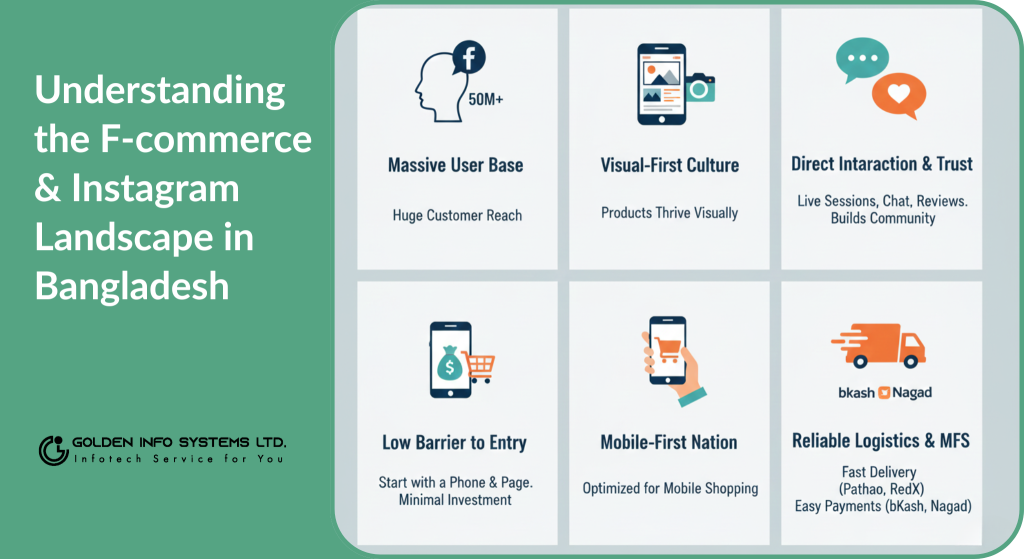
Massive Audience: Facebook has more than 50 million active users within Bangladesh, while Instagram is quickly approaching that number, particularly among the younger generation. Therefore, there is a large number of potential customers and customers are close at hand to buy from you.
Visual-First Culture: Fashion, beauty, and lifestyle products are driven primarily by visualisation. Since both of these platforms are inherently visual-based marketplaces, they give you a medium to effectively showcase your products to your target customer base.
Direct Interaction & Trust: Social media allows you to create a direct line of communication with your customer base. By conducting live sessions, using instant messaging, and responding to comments, you can create an opportunity to connect with your customers on a more personal level. This is important in building trust with consumers purchasing goods online within Bangladesh.
Low Barrier to Entry: As an individual, you only need a smartphone and an active Facebook page and Instagram profile to begin selling on these platforms. The cost to get started selling on these platforms is significantly less than what it would cost to open up a traditional retail store.
Mobile-First Nation: The majority of individuals who access the internet or its resources in Bangladesh do so via their smartphones. As a result, both F-Commerce and Instagram have a better opportunity to create a seamless shopping experience for their customers, as both platforms have been designed to operate and function on mobile devices.
Reliable Delivery and Mobile Payment: The growth of high-quality delivery companies (Pathao, RedX) and Mobile Financial Services (bkash, Nagad) in Bangladesh has made it easy for you to successfully receive payments and deliver your goods to customers throughout the country.
This isn’t just a trend; it’s the new backbone of micro and small businesses in Bangladesh.
Chapter 2: Finding Your Profitable Niche – The Foundation of Success
In my opinion, this may be the most important step of all. You should not attempt to market your products or services to all people. Choosing a niche will provide you with an identity; it will also establish strong connections with a specific audience; and it will give you the ability to be distinct from competitors (larger brands).
What is a “Niche” in F-commerce?
A niche represents a narrower subset of a larger marketplace. For example, instead of describing the broader women’s clothing category, we could say “Modest Fashion for Young Bangladeshi Professionals” or “Eco-Friendly Baby Clothes.”
How to Find Your Profitable Niche:
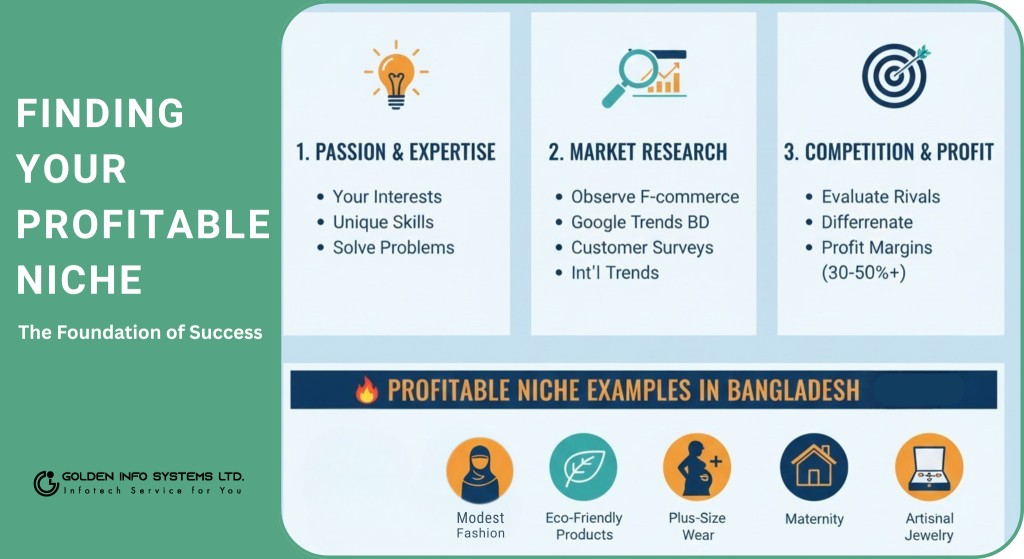
1. Determine Your Passion and Skills:
- Answer the following questions honestly to help identify your passion: What things do I really enjoy doing? What do I spend lots of my free time researching or talking about? The things that I love to do are also the things that motivate me to work.
- Think about the skills or knowledge that you have that is unique to you. Maybe you have a knack for finding unique fabric or a keen eye for trendy accessories that most people don’t know about or have access too.
- Self-reflection question: What type of problems do you see that exist within the marketplace that I can solve for customers? What types of products do you wish were easier for you to get your hands on within Bangladesh?
Research the market Demand and Trends:
- Observe Existing F-commerce Pages: Look at other F-commerce stores that sell products similar to what you are going to sell. What products are selling well for them, and what type of products can I sell where there seems to be a gap in the marketplace? When looking at successful F-commerce stores, read through the comments customers have left to find out what they are talking about and asking about.
- Google Trends & Facebook Insights: Utilise Google Trends and Facebook Insights to find out what types of fashions, home décor, and personal care products are becoming popular in Bangladesh. Look for search terms related to fashion, home décor, and personal care products that seem to be climbing.
- Survey Potential Customers: Talk to family, friends and potential customers in your target demographic about their needs that remain unfulfilled, their frustrations with products that they have had experience with, and what they would be willing to pay for a product.
- Analyze International Trends: Also review what is selling well in other parts of the world by reviewing products in fashion cities (e.g., New York City) or review products that are selling well within your neighbouring countries. The next question to ask yourself is can I adapt these products to my Bangladeshi audience?
Investigate Your Competition:
- Are there other businesses already operating within this niche? If yes, that means there is demand for your products/services!
- How can you stand out from the crowd? By providing superior quality, completely unique designs, exceptional customer service, or faster shipping times, or an interesting backstory regarding your brand.
- If a niche market is extremely competitive, avoid putting yourself into it unless you have a unique way to position yourself to compete with larger brands.
Determine Profitability and Sourcing Options:
- Can you find suppliers of products that fit within your niche at a price that will allow you to make a nice profit? Aim for 30-50% gross profit margin or higher, if possible.
- Is it difficult to locate dependable suppliers for your products in this niche? We will discuss this topic more thoroughly later in this guide.
Profitable Niche Examples for Bangladesh (2026):
- Modest Fashion with a Modern Twist: The combination of modern and traditional styles is found in the modest fashion industry, with options such as hijabs, abayas, or fusion wear that mix both.
- Sustainable & Eco-Friendly Products: Eco-friendly and sustainable options are becoming increasingly important, with examples including reusable shopping bags, organic cotton clothing, and re-usable bags.
- Plus-Size Fashion:There is a significant need for plus-size clothing in Bangladesh for both men and women.
- Maternity & Post-Pregnancy Wear: Maternity clothing should provide comfort, style, and function for mothers-to-be and mothers with newborns.
- Curated Home Decor (Specific Style): There are many ways to style a home based on specific tastes, such as Bohemian designs, minimalist Nordic styles, or traditional Bengali folk art.
- Artisanal & Handmade Jewelry: Unique,Handcrafted jewelry has its own story and is much more unique than mass-produced jewelry.
- Gourmet Food & Snack Boxes: Gourmet food/snack kits can include high-quality chocolate, imported chocolate, exotic teas (many not found in local stores), and customized snack packages.
- Specific Hobby Supplies: There are many specific necessities associated with a hobby: Specialized art supplies, specialized craft kits, or specific sports equipment.
- K-Pop/Anime Merchandise: K-Pop and Anime are very popular among young people in Bangladesh, and they have an increasing amount of merchandise available.
- Pet Accessories & Care: As the number of pets in the country continues to rise, pet owners are searching for cute collars, organic pet food, unique toys, etc.
Choose a niche you genuinely believe in, as your passion will shine through and resonate with your audience.
Chapter 3: Sourcing Your Products – Quality & Reliability is Key
Once you have your niche, the next challenge is finding the right products at the right price. Your sourcing strategy can make or break your business.
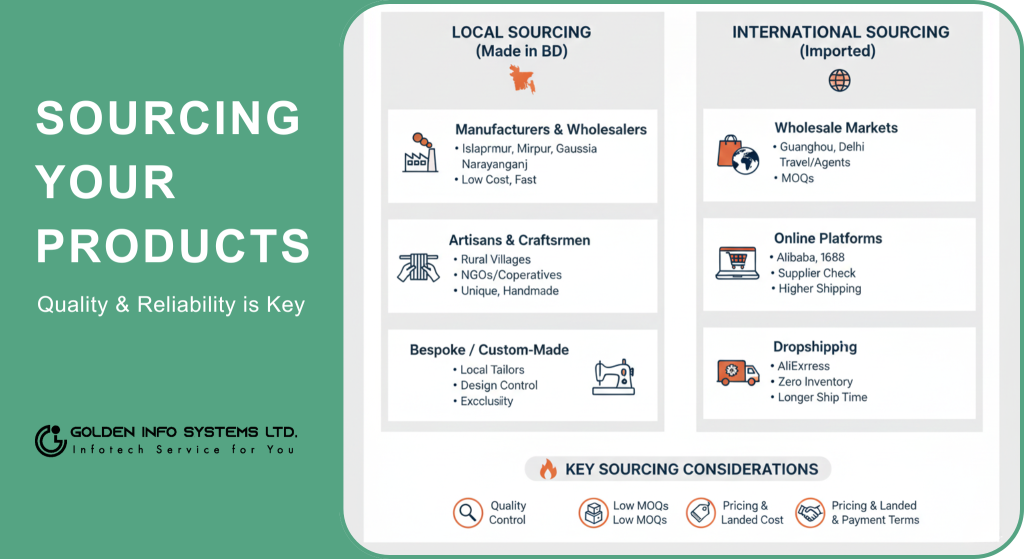
Local Sourcing Strategies (Made in Bangladesh):
Direct from Manufacturers/Wholesalers:
- Dhaka, epitome of Clothing & Textiles – The most notable hubs to obtain or source clothing and textiles would be Islampur, Mirpur Benarasi Polli and Gaussia Market (Fashion Accessory items).
- Narayanganj, leading area for Textile and Knitwear Industries.
- Bogura / Sirajganj for uniquely created Handlooms or Traditional items.
- Contacting Small Factories or Workshops Directly, nurturing relationships with business owners.
- Benefits of this approach; Reduced cost; Speed; Quality control; Supporting the Local Economy.
Artisans & Craftsmen:
- Rural Areas – Travel to designated villages where Craft productions occur (Nakshi Kantha, Clay Products, English & Bangladeshi jute items).
- NGOs & Cooperatives work with these Rural Artisans to provide a fair trade system and a consistent supply chain.
Benefits include the value of the Unique Handmade items with the worth of the craft being an intriguing story and the higher perceived value of the products.
Bespoke / Customised Items (YOUR DESIGNS);
- Local Shops / Tailors facilitate Custom Clothing requirements by offering skilled craftsmen who can construct your specified garments, ensuring they conform closely to your designs.
- The Pro of this process; Full Control over your design, Exclusivity, Strong Branding Opportunity.
International Sourcing Strategies (Imported Goods):
Wholesale Markets (China / India):
Guangzhou (China): Specializes in electronic products and other items (fashion, accessories) for wholesale distribution.
Delhi and Mumbai (India): Specializes in specific ethnic wear, jewelry, or designs specific to an ethnic group.
Typical Challenges: Requires travelling (or having reliable agents) to purchase these types of items, along with compliance with customs and requirements regarding MOQs.
Online Platforms for Wholesalers:
Alibaba/1688 (China): Marketplaces for manufacturers and wholesalers, with many supplier listings. Ensure that you verify supplier ratings and ratings of suppliers on these sites.
Wholesale Central/Faire (USA/Europe): Marketplaces that specialize in higher-end products. Shipping costs are generally higher than from Alibaba/1688.
Dropshipping (Minimal Risk):
Platforms: AliExpress, SaleHoo.
How it works: You can sell products through your own store. When you receive an order, you then purchase the item you sold from the supplier. The supplier will then ship the product directly to your customer.
Advantages: No inventory costs; you can order products only when a customer buys them, with no cost up front for products.
Disadvantages: Longer shipping times; you have less control over quality; potentially face customs problems; typically lower profit margins.
Key Considerations for Sourcing:
Quality Control: Critical to F-commerce. Regularly assess product samples. Cultivate partnerships with suppliers who acknowledge your desired quality levels.
MOQs: Work with suppliers who have lower MOQs to limit initial outlays and permit testing of products.
Pricing: Develop an effective negotiating strategy. Determining landed costs (product price + shipping + duty).
Dependable: Does your supplier provide reliable, timely deliveries meeting product specifications?
Terms of Payment: Initially use COD for small orders, progressing to prepayment as trust increases.
Chapter 4: Setting Up Your Digital Storefront – Facebook & Instagram Optimization
Your Facebook Page and Instagram Profile are your virtual showroom. They need to be professional, engaging, and easy to navigate.
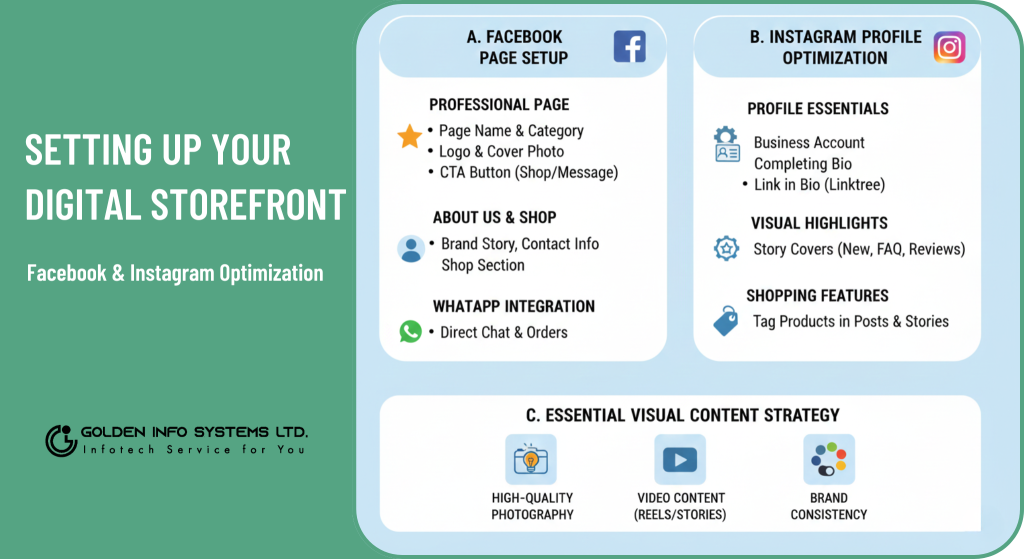
A. Facebook Page Setup:
- Create a Professional Page:
- Page Name: Your brand name (e.g., “The Modest Wardrobe BD,” “Crafted by Dhaka”).
- Category: “Shopping & Retail,” “Clothing (Brand),” “E-commerce Website.”
- Profile Picture: Your clear, high-resolution logo.
- Cover Photo: Visually appealing image showcasing your best products or brand aesthetic.
- Call-to-Action (CTA) Button: Set to “Shop Now” (if you have a website) or “Send Message” (to WhatsApp/Messenger).
- Complete “About Us” Section:
- Tell your brand story, what makes you unique, your mission, and contact information (WhatsApp number, email).
- Set Up a Shop Section:
- Use Facebook Shop to list your products directly. You can tag products in your posts and stories, making them shoppable.
- Integrate WhatsApp Business:
- Link your WhatsApp Business number to your Facebook Page for direct customer inquiries and order placement. This is essential in Bangladesh.
B. Instagram Profile Optimization:
- Switch to a Business Account: Access insights, run ads, and add contact buttons.
- Compelling Bio:
- Briefly describe what you sell, who you serve, and what makes you unique.
- Include a strong Call-to-Action (e.g., “Shop Latest Collection Below!”).
- Use relevant emojis.
- Link in Bio:
- Use a tool like Linktree or Carrd to link to multiple destinations (e.g., WhatsApp, product catalog, website, other social profiles).
- Highlight Covers:
- Create visually appealing highlight covers for important information: “New Arrivals,” “Customer Reviews,” “How to Order,” “Shipping Info,” “FAQs.”
- Use Instagram Shopping Features:
- Tag products in your posts and stories (requires Facebook Shop integration). This creates a seamless shopping experience.
C. Essential Visual Content Strategy:
- High-Quality Product Photography:
- Lighting: Natural light is best. Avoid harsh shadows.
- Background: Clean, minimalist, and consistent. Use plain white, a textured wall, or a simple prop.
- Angles: Show products from multiple angles.
- Details: Capture close-ups of fabric, stitching, and unique features.
- Modeling: For clothing, use models (professional or friends) to show how items look when worn. Show diversity.
- Lifestyle Content:
- Show your products being used in real-life scenarios. For clothing, this means showing outfits in different settings.
- This helps customers visualize themselves with your product.
- Video Content (Reels & Stories):
- Product Demos: Show how products work or how clothes move.
- Behind-the-Scenes: Show your sourcing, packaging, or design process to build authenticity.
- “Get Ready With Me” (GRWM) / Outfit of the Day (OOTD): Engaging format for fashion.
- Tutorials: How to style an accessory, how to care for a fabric.
- Consistency: Maintain a consistent aesthetic and branding across all your posts. Use the same filters or color palette.
Chapter 5: Marketing & Customer Acquisition – Reaching Your Bangladeshi Audience
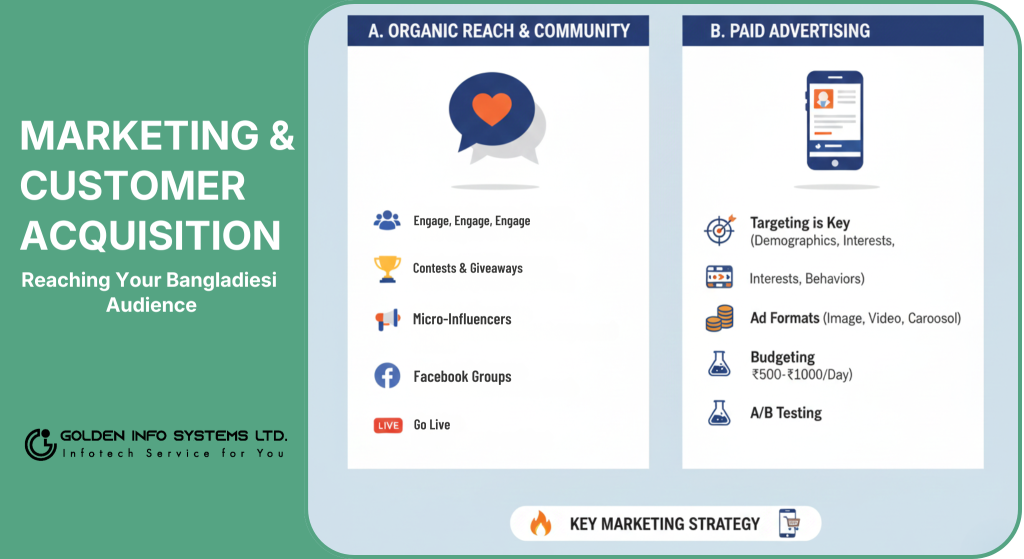
Even with great products, you need a solid marketing strategy to get noticed.
A. Organic Reach & Community Building:
- Engage, Engage, Engage:
- Respond to all comments and messages promptly.
- Ask questions in your captions to encourage interaction.
- Run polls and quizzes on Instagram Stories.
- Run Contests & Giveaways:
- “Like, Share, Tag 3 Friends to Win” contests are highly effective for increasing visibility and followers.
- Collaborate with Micro-Influencers:
- Identify local influencers with 5k-50k followers whose audience aligns with your niche. Offer them free products in exchange for authentic reviews or posts. This builds trust faster than paid ads alone.
- Utilize Facebook Groups:
- Join relevant Bangladeshi shopping, fashion, or lifestyle groups. Share your content (tastefully, and according to group rules) or answer questions to establish yourself as an expert.
- Go Live:
- Host regular Facebook/Instagram Live sessions to showcase new arrivals, answer FAQs, and interact directly with your audience. Live sales are extremely popular in Bangladesh.
B. Paid Advertising (Facebook & Instagram Ads):
- Targeting is Key:
- Demographics: Target by age, gender, location (e.g., Dhaka, Chittagong, Sylhet), and language (Bangla, English).
- Interests: Target users interested in specific fashion brands, designers, shopping pages, or lifestyle topics relevant to your niche.
- Behaviors: Target people who have engaged with shopping content, recently purchased online, or used MFS services.
- Custom Audiences: Upload your customer email/phone list to target them specifically.
- Lookalike Audiences: Create audiences that resemble your existing customers or page engagers.
- Ad Formats:
- Image Ads: Showcase your best product photos.
- Video Ads: Highly engaging, especially for product demos or lifestyle content (Reels).
- Carousel Ads: Display multiple products or different angles of one product.
- Collection Ads: A full-screen mobile experience where customers can browse and buy products directly.
- Budgeting: Start small (e.g., ৳500-৳1000 per day) and scale up as you see results.
- A/B Testing: Test different ad creatives, copy, and target audiences to find what works best.
Chapter 6: Operations & Logistics – From Order to Delivery
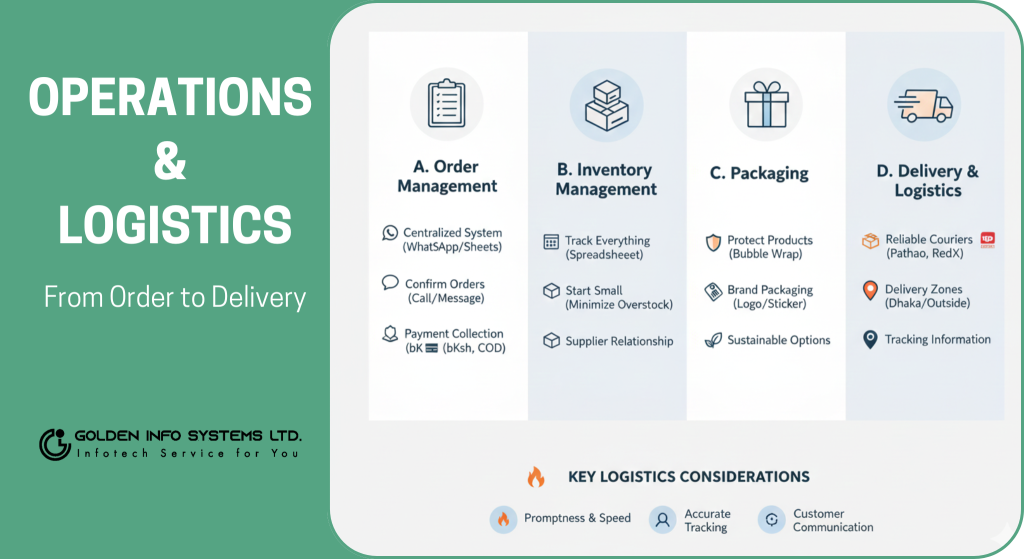
Efficient operations are crucial for customer satisfaction and repeat business.
A. Order Management:
- Centralized System: Use WhatsApp Business for direct orders. Consider simple tools like Google Sheets or a small CRM to track orders.
- Confirm Orders: Always confirm orders with customers via phone call or message, reiterating product details, price, and delivery charges.
- Payment Collection:
- Mobile Financial Services (MFS): Primarily bKash, Nagad, and Rocket for advance payments.
- Cash on Delivery (COD): Essential for building trust, especially with new customers. Most courier services handle COD collection.
B. Inventory Management (Crucial for Profitability):
- Start Small: Don’t overstock. Begin with limited quantities to test demand.
- Track Everything: Use a simple spreadsheet to track:
- Product ID/SKU
- Purchase Price
- Selling Price
- Quantity In Stock
- Quantity Sold
- Location (if applicable)
- Regular Audits: Periodically count your physical stock and compare it to your records.
- Supplier Relationship: Maintain good communication with suppliers for quick reordering of popular items.
C. Packaging:
- Protect Your Products: Use appropriate packaging (bubble wrap, sturdy boxes/polybags) to prevent damage during transit.
- Brand Your Packaging: Even a simple sticker with your logo can elevate the unboxing experience.
- Sustainable Options: Consider eco-friendly packaging if it aligns with your brand (e.g., reusable cloth bags, recycled paper).
- Source: Find affordable packaging suppliers in areas like Chawkbazar in Dhaka.
D. Delivery & Logistics (The Backbone of F-commerce):
- Partner with Reliable Courier Services:
- Key Players: Pathao Courier, RedX Delivery, eCourier, Steadfast Courier.
- Services: They offer nationwide delivery, cash-on-delivery (COD) collection, real-time tracking, and merchant accounts.
- Negotiate Rates: For bulk orders, you might get better rates.
- Delivery Zones:
- Inside Dhaka: Faster, often next-day delivery.
- Outside Dhaka: Usually 2-5 days, depending on location.
- Manage Expectations: Clearly communicate delivery timelines and charges to customers.
- Tracking Information: Provide customers with tracking numbers so they can monitor their orders.
Chapter 7: Customer Service & Building Brand Loyalty
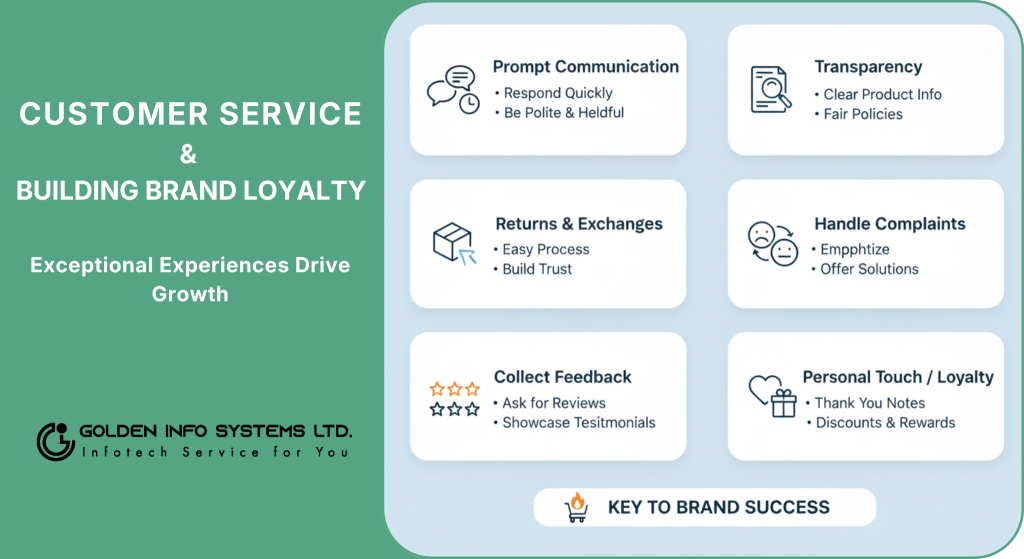
Exceptional customer service is your competitive edge. In a crowded market, a great experience brings customers back.
- Prompt Communication:
- Respond to inquiries within minutes, not hours, especially on Messenger/WhatsApp.
- Be polite, patient, and helpful.
- Transparency:
- Be upfront about product details, sizing, colors, potential delays, and return policies.
- Return & Exchange Policy:
- Have a clear, fair, and easy-to-understand policy. While returns are a hassle, a smooth process builds trust. Consider offering exchanges or store credit.
- Handle Complaints Gracefully:
- Address negative feedback privately and professionally. Empathize with the customer and offer a solution (e.g., refund, exchange, discount on next purchase).
- Turn a negative experience into a positive one.
- Collect Feedback:
- Ask customers for reviews and testimonials after delivery. Use Google Forms or direct messages.
- Showcase positive reviews on your social media highlights.
- Loyalty Programs:
- Offer discounts to repeat customers, loyalty points, or special access to new collections.
- Personal Touch:
- Include a handwritten thank you note with each order. Small gestures create lasting impressions.
Chapter 8: Legal & Financial Essentials in Bangladesh
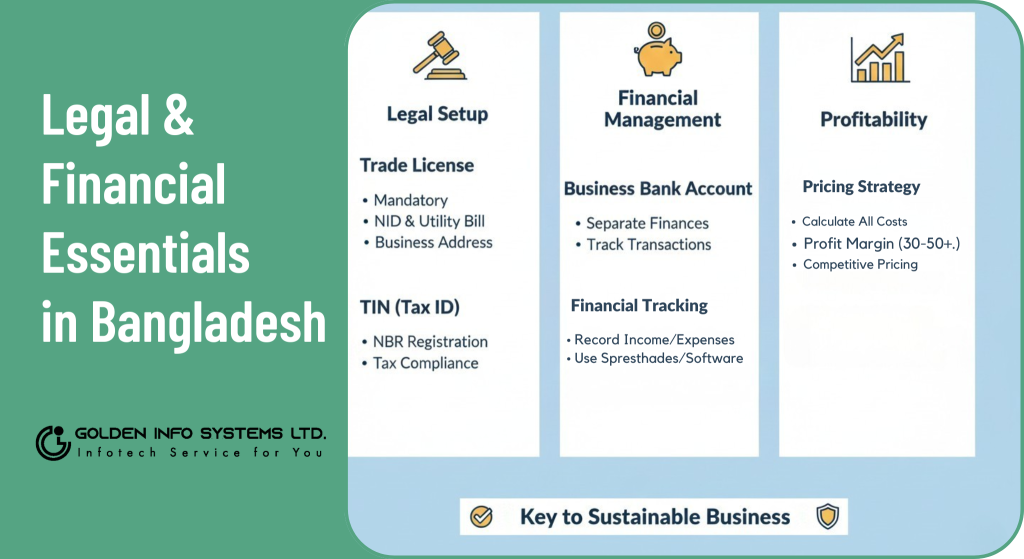
Don’t overlook the basics to ensure your business is legitimate and sustainable.
- Trade License:
- Mandatory: Obtain a Trade License from your local City Corporation or Municipal Office. This legitimizes your business.
- Requirements: NID, utility bill, business address (even if home-based initially), and relevant documents.
- Business Bank Account:
- Once you have a Trade License, open a separate bank account for your business. This is crucial for tracking finances.
- TIN (Taxpayer Identification Number):
- Register for a TIN with the NBR (National Board of Revenue) for tax purposes.
- Financial Tracking:
- Keep meticulous records of all income and expenses. Use simple accounting software (like Zoho Books, Wave) or even Google Sheets.
- Separate personal and business finances from day one.
- Pricing Strategy:
- Calculate all costs: product cost, sourcing cost, shipping, packaging, marketing, MFS charges, your time.
- Set a price that ensures profitability and is competitive within your niche.
Chapter 9: Scaling Your F-commerce/Instagram Boutique
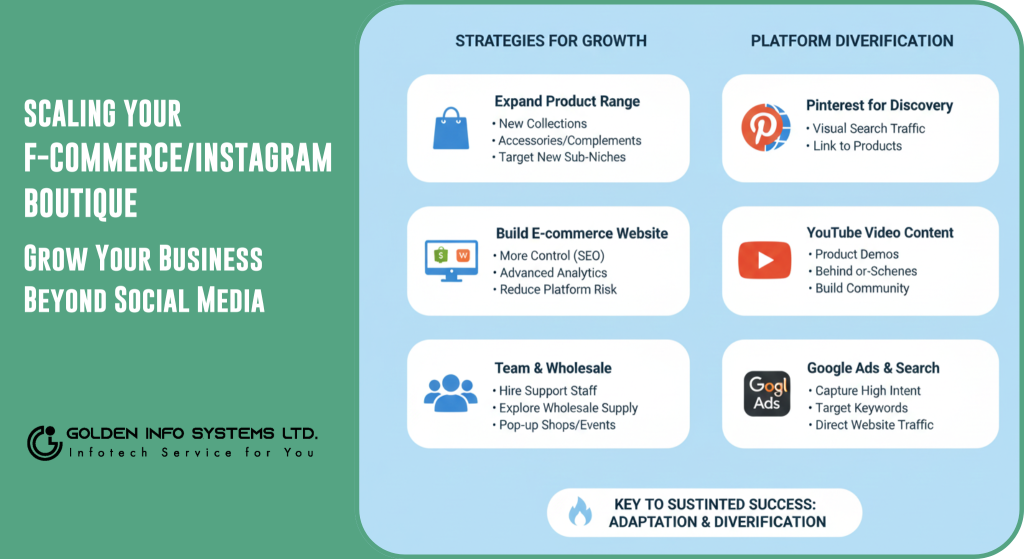
Once you’ve achieved initial success, think about how to grow.
- Expand Your Product Range (within your niche):
- If you sell modest fashion, add accessories, matching bags, or specific footwear.
- If you sell home decor, introduce seasonal collections or expand to different rooms.
- Build Your Own Website (E-commerce Store):
- As you grow, a dedicated website (Shopify, WooCommerce) gives you more control, reduces reliance on social media algorithms, and allows for more sophisticated features (advanced analytics, SEO).
- Hire Support Staff:
- As orders increase, consider hiring part-time help for packaging, customer service, or managing social media.
- Explore Wholesale:
- Can you supply your unique products to smaller boutiques or physical stores?
- Physical Pop-up Stores/Exhibitions:
- Participate in local bazaars, trade fairs, or pop-up events to gain visibility and connect with customers offline.
- Diversify Marketing Channels:
- Consider Pinterest for visual discovery, YouTube for video content, or Google Ads for direct search traffic.
Conclusion: Your Journey Starts Now!
The opportunity to create a bangladesh instagram boutique with a niche market through F-Commerce is amazing. There is a huge market for these types of boutiques in Bangladesh, the tools to do this are readily available and there is a growing demand for high quality unique products. This means that starting a niche F-commerce/Instagram Business in Bangladesh today is an incredible opportunity to make money from your passions.
You’ll need to keep in mind that achieving success with this business will not come easy or quickly; it takes work, constant learning, flexibility and the ability to listen to and serve your customers first! But by following the steps outlined in this guide exactly: finding your ideal niche and where to source your products reliably; becoming knowledgeable about Digital Marketing and truly serving your customers; you are creating a solid foundation for a successful and profitable boutique.
Go ahead! Research your ideal niche, begin building your social media network and start reaching out to potential customers. There is a digital market waiting for you with your distinct idea in Bangladesh.
What niche are you excited to explore first? Share your thoughts in the comments below!
Frequently Asked Questions (FAQ) for F-commerce Entrepreneurs
Q1: Do I need a Trade License or DBID to start my small F-commerce page?
A: While many small, home-based F-commerce pages start without formal registration, it is highly recommended to formalize your business as soon as your idea is validated and you start generating regular income.
- Trade License: This is mandatory for running any legal commercial activity in a specific area. You will need it to open a formal business bank account.
- DBID (Digital Business Identification): This is a unique identifier issued by the Registrar of Joint Stock Companies and Firms (RJSC). It is the government’s way of formally recognizing digital businesses. Getting a DBID helps build credibility with customers and demonstrates compliance with the Ministry of Commerce guidelines.
- Recommendation: Start with low capital and test the market. Once you are generating ৳20,000+ in monthly sales, apply for your Trade License and TIN (Tax Identification Number).
Q2: What is the absolute minimum capital needed to launch a niche boutique?
A: You can launch a niche F-commerce boutique with minimal initial capital, primarily covering product samples, packaging, and marketing.
- Minimum Investment (৳10,000 – ৳30,000): This budget is sufficient for:
- Product Samples: Buying a small batch of 5-10 items to photograph and test.
- Packaging: Branded stickers, polybags, and bubble wrap.
- Digital Marketing: Running initial targeted Facebook/Instagram ads (e.g., ৳500-৳1,000 per day for one week).
- Near-Zero Investment: If you choose a dropshipping model, you can eliminate inventory costs entirely, making the initial investment limited only to domain/platform fees (if using a basic website) and advertising costs.
Q3: How do I handle deliveries outside Dhaka and manage Cash on Delivery (COD)?
A: You must partner with dedicated, reliable third-party courier services that specialize in e-commerce logistics in Bangladesh.
- Key Partners: Companies like Pathao Courier, RedX Delivery, eCourier, and Steadfast offer nationwide delivery services.
- COD Management: These partners handle the Cash on Delivery (COD) collection from the customer upon delivery. They deposit the collected cash directly into your designated bank account (or MFS account) after deducting their service and COD collection charges.
- Logistics Tip: Clearly communicate delivery charges and expected timelines (e.g., 1-2 days inside Dhaka, 3-5 days outside Dhaka) to set accurate customer expectations.
Q4: How can I build trust and prevent scams/fraud in an F-commerce business?
A: Trust is the most valuable currency in online sales in Bangladesh.
- Authentic Visuals: Always post your own high-quality, real photos and videos of the product (not just stock photos from suppliers). Use live sessions to showcase the product.
- Transparency: Clearly state your Return/Exchange Policy upfront and stick to it. Be honest about product material and sizing.
- Social Proof: Actively request and share customer reviews and testimonials (video reviews are the most powerful). Feature screenshots of positive Messenger chats (with permission).
- Formalization: Displaying a DBID number or a Trade License reference on your page, when available, significantly boosts credibility.
Q5: When should I move from F-commerce to a full E-commerce website (like Shopify/WooCommerce)?
A: You should consider switching from F-commerce to a dedicated website when you encounter these critical scaling issues:
| F-COMMERCE LIMITATION | SOLUTION (Website) |
| Manual Order Taking: Overwhelmed by Messenger/WhatsApp orders. | Automated Checkout: Customers enter details, pay, and place the order instantly. |
| Algorithm Risk: Low organic reach due to Facebook/Instagram algorithm changes. | SEO & Direct Traffic: You own the customer relationship and can attract customers directly from Google Search. |
| No Central Database: Difficulty tracking customer history and purchase behavior. | CRM/Database: The website automatically stores customer and sales data for remarketing. |
| Lack of Professionalism: Looks less credible for high-value items. | Stronger Brand Image: A dedicated domain (yourbrand.com) provides superior professional credibility. |
Recommendation: Continue optimizing F-commerce for marketing and brand building, but launch a simple e-commerce site (like one built on Shopify or a local platform like Bitcommerz) once your sales exceed 150-200 orders per month.