





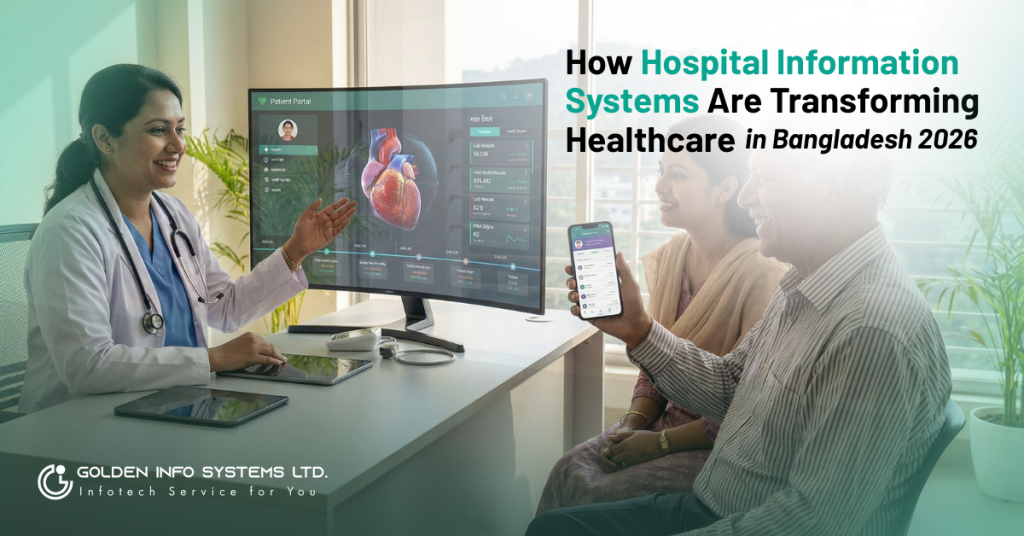
Over 41% of people in Bangladesh faced financial hardship due to out-of-pocket healthcare costs? It’s a staggering statistic, but imagine a future where hospitals run so efficiently that unnecessary costs are slashed, administrative waste is eliminated, and patient care becomes seamless. That future isn’t far off—it’s happening right now.
As we step further into 2026, the medical landscape in our country is shifting rapidly. If you are a hospital administrator, a doctor, or a patient, you might have noticed the change. Paper files are disappearing, queues are getting shorter, and appointments are just a click away. This isn’t magic; it’s the power of technology. In this guide, we will explore exactly how hospital information systems are transforming healthcare in Bangladesh 2026 and what this means for you.
What is a Hospital Information System (HIS)?
Before we dive into the transformation, let’s clarify what we are talking about. A Hospital Information System (HIS) is not just a billing software; it is a comprehensive, integrated software solution designed to manage all the aspects of a hospital’s operation.
Think of it as the “brain” and “central nervous system” of a modern hospital. It connects every department—from the reception desk to the specialized operating theaters. It handles medical, administrative, financial, and legal issues and corresponding service processing.
When implemented correctly, an HIS covers:
- Clinical Management: Electronic prescriptions, doctor notes, and nursing stations.
- Administrative Management: HR, duty rostering, and bed management.
- Financial Management: Billing, insurance claims, and revenue cycle management.
- Support Services: Laboratory (LIS), Radiology (RIS), and Pharmacy management.
From the moment a patient walks in (registration) to the moment they leave (billing and discharge), the HIS is working in the background to ensure the process is smooth and error-free.
Why is HIS Crucial for Bangladesh Now?
For years, our healthcare sector struggled with fragmented data and operational inefficiencies. You might remember the days of carrying huge files of prescriptions, X-ray films, and test reports from one doctor to another. If you lost that file, your medical history was gone forever.
However, the context has changed dramatically. With the government’s “Smart Bangladesh 2041” vision, the push for digitization is stronger than ever. The pillars of “Smart Citizen” and “Smart Government” demand a healthcare system that is data-driven and patient-centric.
In 2026, adopting these systems isn’t just a luxury for elite corporate hospitals in Dhaka like Square or Evercare; it’s becoming a standard necessity for medium-sized clinics, diagnostic centers, and Upazila Health Complexes across the division. Patients now demand the convenience of digital services, and hospitals that fail to upgrade risk becoming obsolete “offline” entities in an online world.
How Hospital Information Systems Are Transforming Healthcare in Bangladesh 2026 Landscape
The year 2026 marks a turning point. The integration of digital health IDs and the push for Universal Health Coverage (UHC) are driving massive changes. Here is a detailed look at how hospital information systems are transforming healthcare in Bangladesh right now.
1. The End of the “Paper Chase” (EHR Integration)
The biggest change you will see is the shift to Electronic Health Records (EHR). In the past, if you switched doctors—say, moving from a specialist in Chittagong to one in Dhaka—you had to verbally repeat your entire medical history.
Now, with centralized HIS and interoperable standards, your data travels with you.
- For Patients: No more fear of losing old prescriptions or previous diagnosis reports. Your health history is stored securely in the cloud.
- For Doctors: Instant access to a patient’s history means faster, more accurate diagnoses. A doctor can immediately see if a patient is allergic to penicillin without digging through piles of paper.
2. Telemedicine is No Longer “Optional”
Remember when telemedicine was just a backup plan during the pandemic? In 2026, it is fully integrated into the hospital software ecosystem. It is no longer just a video call; it is a complete workflow.
You can book an appointment, pay via mobile financial services (like bKash or Nagad), consult via video, and get your digital prescription—all through the hospital’s integrated app. This is crucial for bridging the gap between rural patients and urban specialists. “Hybrid” models are also emerging, where patients can visit a local pharmacy equipped with a telemedicine kiosk to connect with doctors in the city.
3. Smart Inventory Management & Stopping Revenue Leakage
One of the hidden costs in Bangladeshi hospitals has always been waste and “revenue leakage.”
- Leakage: This happens when a service is performed (like a dressing change) but never billed, or when pharmacy stock disappears without a record.
- Waste: Medicines expiring on shelves because no one noticed the dates.
Modern HIS includes automated inventory tracking. It sends alerts when stock is low or near expiry. It also forces “mandatory billing” before service delivery, ensuring that every taka is accounted for. Result: Hospitals save money, financial transparency increases, and patients are assured they are getting genuine, unexpired medicines.
4. Data-Driven Decisions with AI
Artificial Intelligence (AI) is stepping in to help doctors, acting as a “second pair of eyes.” New HIS platforms in Bangladesh are starting to include AI tools that can flag potential health risks based on your data.
- Real-world Example: AI algorithms are now being used to screen for Diabetic Retinopathy in rural eye camps. The AI analyzes retinal images and instantly flags patients who need urgent care, increasing the productivity of ophthalmologists by up to 40%.
- Predictive Alerts: If you have a history of high blood pressure, the system might remind your doctor to check for kidney function or other related issues automatically.
5. The Mobile Health (mHealth) Revolution
It’s impossible to talk about 2026 without mentioning the smartphone. Bangladesh has immense mobile penetration. HIS providers are leveraging this by launching patient portals and mobile apps.
- Self-Service: You can download your own lab reports the moment they are ready—no more traveling to the hospital just to pick up a piece of paper.
- Engagement: Hospitals send automated SMS reminders for vaccination dates or follow-up visits, ensuring patients stick to their treatment plans.
Comparison: Traditional vs. Digital Hospitals
To see the real impact, let’s look at how things have changed across various dimensions.
| Feature | Traditional Hospital (Pre-2020s) | Digital Hospital (2026 Standard) |
| Patient Records | Physical paper files, often lost, damaged, or fragmented. | Secure, cloud-based Electronic Health Records (EHR) accessible instantly. |
| Appointments | Long queues at the counter, phone calls that go unanswered. | Online booking via apps or websites 24/7 with instant confirmation. |
| Billing | Manual calculations, slow processing, hidden charges, and errors. | Automated, transparent billing with insurance integration and breakdown. |
| Doctor Access | Limited to physical visits during specific hours. | Integrated Telemedicine, remote monitoring, and “Ask a Doctor” chat features. |
| Inventory | Manual stock taking, frequent stock-outs, and expired medicine issues. | Real-time tracking, auto-reordering, and expiry alerts. |
| Data Security | Low (files accessible to anyone in the room/cabinet). | High (Encrypted data with role-based access control). |
| Follow-up | Reliance on patient memory; often missed. | Automated SMS/App reminders for check-ups and medications. |
The Role of Cloud Infrastructure and Security
cloud resilience is key.
You might wonder where all this data is stored. Is it safe? This is where cloud infrastructure comes in. As discussed in recent tech trends, scalability and resilience are vital.
Bangladeshi hospitals are moving away from bulky on-site servers (which are vulnerable to power surges and physical damage) to secure cloud solutions. This ensures that even if a hospital faces a power outage or a local hardware failure, your patient data remains safe and accessible.
Cybersecurity is Paramount: With great data comes great responsibility. As we move towards 2026, the threat of cyberattacks is real. Top-tier HIS providers are implementing:
- Role-Based Access Control (RBAC): A receptionist can see your appointment time but not your sensitive HIV test result; only your doctor can see that.
- Data Localization: Ensuring that sensitive health data is stored on servers that comply with Bangladesh’s emerging data privacy regulations.
Key Benefits of Implementing HIS in Bangladesh
If you manage a clinic or hospital, you might be asking, “Is it worth the investment?” The answer is a resounding yes.
1. Operational Efficiency
Your staff spends less time filling out forms and more time caring for patients. Automated administrative tasks reduce the workload on nurses and receptionists significantly.
2. Financial Leakage Control
In a manual system, it’s easy for revenue to “leak” through unbilled services or inventory theft. An HIS tracks every pill dispensed and every service rendered, ensuring 100% revenue capture.
3. Improved Patient Experience
This is about your reputation. Patients in 2026 expect convenience. If they can view their lab reports on their phone instead of traveling to the hospital to pick them up, they will choose your hospital over competitors.
4. Better Public Health Planning
When hospitals across the country use digital systems, the government can aggregate anonymized data to spot trends. For example, if an HIS detects a spike in high-fever cases in a specific Upazila, health officials can deploy resources to fight a potential Dengue outbreak before it becomes an epidemic.
Challenges to Overcome
While hospital information systems are transforming healthcare in Bangladesh, the road isn’t without bumps.
- Infrastructure: While Dhaka is well-connected, rural areas still face internet instability. Solutions like hybrid-offline software (which syncs when the internet returns) and solar-powered server rooms are becoming essential.
- The “Doctor Ego” & Training: Moving from paper to digital requires a mindset shift. Some senior consultants may be resistant to typing prescriptions. Hospitals are overcoming this by using voice-to-text features or employing medical scribes.
- Skilled Manpower: There is a shortage of IT professionals who understand healthcare workflows. Continuous training and outsourcing technical support to reliable vendors are the solutions here.
- Cost: Initial setup costs can be high. However, the rise of Subscription-based (SaaS) models allows smaller clinics to pay a monthly fee rather than a huge upfront capital investment.
Future Trends: What’s Next for Bangladesh Healthcare?
Looking beyond 2026, the transformation will deepen.
- IoT Integration: Wearable devices (like smartwatches) sending real-time health data (heart rate, glucose levels) directly to the hospital’s system for remote monitoring of chronic diseases.
- Blockchain for Security: This will likely be the next step to ensure that patient data is unhackable, private, and truly owned by the patient.
- 5G Connectivity: With the rollout of 5G, we will see high-definition remote surgeries and real-time transmission of large files like MRI scans without any lag.
- Predictive Analytics: Hospitals knowing when a dengue outbreak might peak and stocking up on resources beforehand.
FAQ: Hospital Information Systems in Bangladesh
Q1: What is the main benefit of HIS for a patient in Bangladesh?
The main benefit is convenience and safety. You get faster access to your medical records, online appointment booking, and you don’t have to carry physical files, reducing the risk of lost medical history.
Q2: Is patient data safe in these systems?
Yes, reputable HIS solutions use bank-level encryption and secure cloud servers to protect patient privacy. This is often much safer than physical files that can be easily accessed, lost, or stolen from a cabinet.
Q3: Can small clinics in Bangladesh afford HIS software?
Absolutely. With the rise of Cloud-based (SaaS) software, clinics can pay a small monthly fee (subscription model) instead of buying expensive servers, making it accessible for practices of all sizes.
Q4: How does HIS support the “Smart Bangladesh” vision?
HIS is a core pillar of Smart Health. It digitizes health records, enables interoperability between government and private hospitals, and ensures data-driven policymaking for the nation.
Q5: Do these systems work in Bangla?
Many local software providers are now offering HIS interfaces in both English and Bangla to ensure ease of use for all staff members, nurses, and patients who may not be fluent in English.
Ready to Transform Your Healthcare Facility?
The revolution is here, and your facility shouldn’t be left behind. Whether you run a diagnostic center, a small clinic, or a multi-specialty hospital, digitization is the key to survival and growth in 2026.
Don’t let outdated paper systems slow you down. Upgrade your healthcare management today.
Get a Free Demo of Our HIS Solution
Join the movement of Smarter Healthcare. Contact us to learn how we can tailor a system for your needs.